Traditional sand-and-cement render, usually finished with masonry paint, covers a huge share of older UK homes. Paint can look tired for two quite different reasons: it is dirty and covered in growth, or the paint itself is chalking, flaking or failing. Cleaning fixes the first and reveals the second. Once algae and dirt are gone, many painted walls look good enough to leave for several more years without repainting.
Where repainting is planned, cleaning is the essential first step, because masonry paint will not bond properly over live algae, mould or chalky dirt. Painting over growth simply traps it, and it often shows through again within a year or two. A biocide treatment kills the growth so the new paint goes onto a sound, clean surface. Loose or flaking paint and hollow or cracked render found during cleaning are pointed out so they can be dealt with before decorating.
What is included
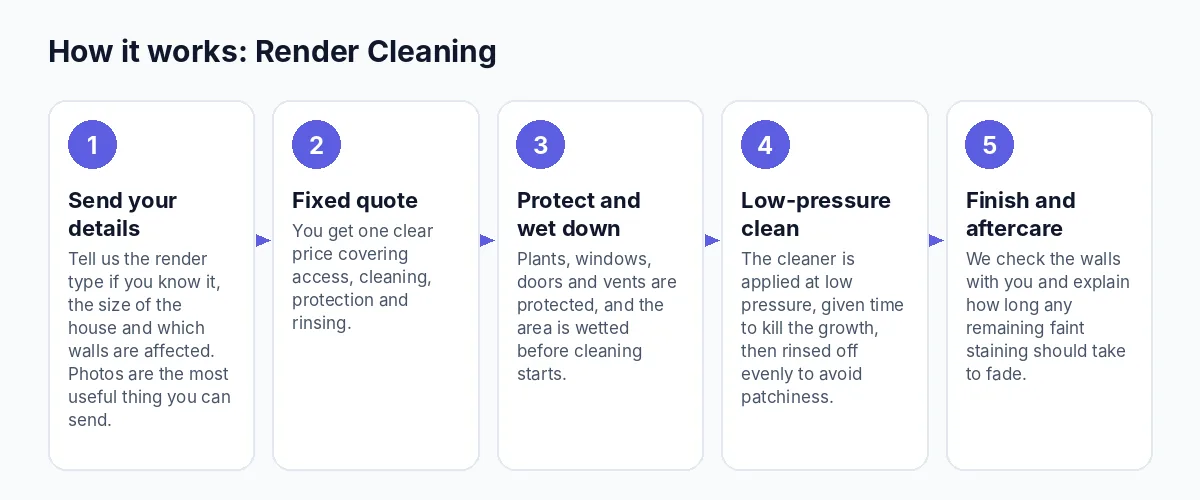
- Checking the paint and render for flaking, chalking and cracks
- Protecting plants, windows, doors and paving
- Low-pressure biocide application to kill algae and mould
- Dwell time to treat growth fully before rinsing
- Low-pressure rinse to avoid lifting sound paint
- Noting loose paint, hollow areas and cracks for repair
- Advice on whether the wall needs repainting or just cleaning
Who it is for
- Older homes with painted render that has turned green or grey
- Walls being prepared for repainting
- Homeowners deciding whether to clean or repaint
- Painted gable ends and rear walls that face north
- Landlords refreshing the outside of a property between tenancies
How much does it cost?
As a guide, cleaning painted or sand-and-cement render usually costs £4 to £8 per square metre, or £300 to £600 for a typical semi-detached house, which is far less than repainting with access equipment. See our full cost guide.