Pebbledash has small stones thrown into a wet render coat, while Tyrolean is a textured render flicked onto the wall with a hand-operated machine. Both create a deep, rough surface full of hollows where dirt, algae, moss and lichen sit out of reach. That texture is exactly why they are hard to clean and why pressure washing them is a bad idea: the jet can knock out stones, break up the texture and drive water behind loose patches.
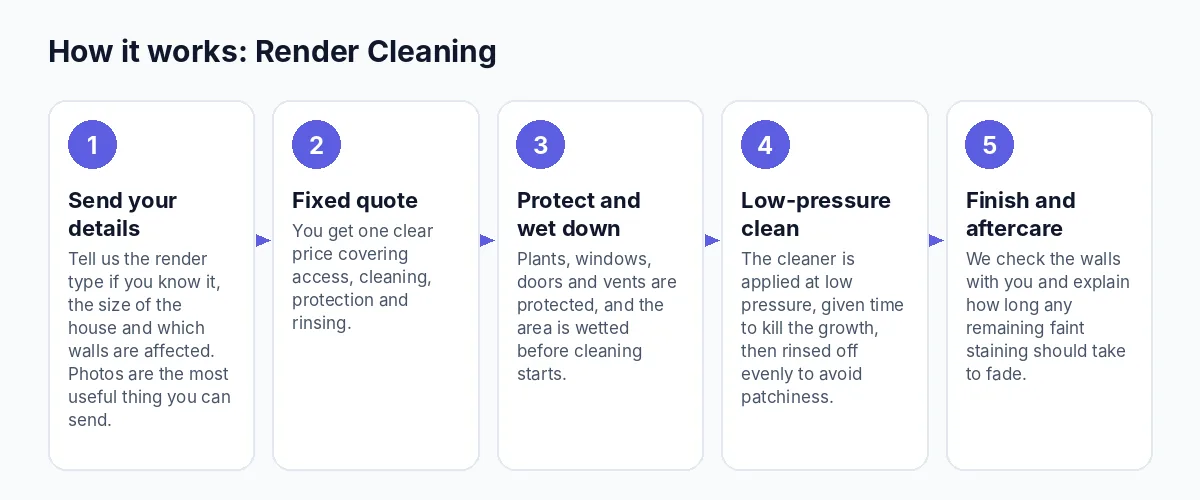
Instead, a biocide is applied at low pressure and given longer to work, so it soaks into the texture and kills the growth where a brush or jet cannot reach. Lichen in particular dies slowly and can take several weeks to weather away after treatment. Before cleaning, the surface is checked for hollow or blown areas and missing stones, which are common on older pebbledash, so you know what condition the wall is in.
What is included
- Checking for hollow render, cracks and missing aggregate
- Protecting plants, glazing, vents and paving
- Low-pressure biocide application worked into the texture
- Longer dwell time for deep-seated growth and lichen
- Gentle rinse that does not dislodge stones or texture
- Optional protective treatment to slow regrowth
- Aftercare advice on how remaining marks will fade
Who it is for
- Older homes with pebbledash or spar dash
- Tyrolean finishes on bungalows, gables and extensions
- Textured render covered in moss or lichen
- Homeowners deciding between cleaning and re-rendering
- Walls being prepared for painting with masonry paint
How much does it cost?
As a guide, pebbledash and Tyrolean cleaning usually costs £5 to £10 per square metre, or around £350 to £700 for a typical semi-detached house, as the texture takes more product and time than smooth render. See our full cost guide.